

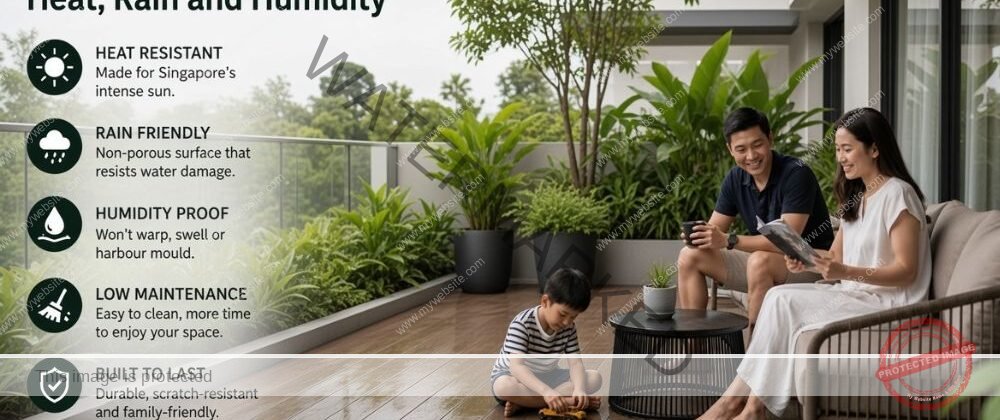
Low-Maintenance Outdoor Floors That Handle Heat, Rain, and Humidity
Singapore’s outdoor spaces have to cope with heat, heavy rain and high humidity throughout the year. Daytime temperatures regularly reach 31–33°C, relative humidity averages around 82 percent, and rain falls on about 171 days each year. All of this puts outdoor flooring under constant exposure to moisture, heat and UV, which can affect how well a surface looks and performs over time.
This makes the choice of flooring especially important for balconies, patios and outdoor decks. A material needs to handle changing weather conditions without requiring constant cleaning, sealing or repairs. Natural timber offers a warm and natural appearance, but it can need regular maintenance to protect it from the elements. Composite decking, particularly modern capped wood-plastic composite (WPC), provides an alternative designed for easier upkeep and reliable outdoor performance.
Why Composite Outperforms Natural Timber in Our Climate
Natural timber decks start with an authentic grain and often feel cooler underfoot. The problem appears over time. High humidity and frequent rain encourage moisture absorption. This leads to swelling, warping, mould growth, and eventual rot if the wood is not regularly oiled and maintained. Termites remain a risk in some situations. UV exposure causes the surface to grey and can open small cracks/splinters. Many homeowners find themselves oiling every six to twelve months just to keep the deck serviceable.
Composite (WPC) boards are made from wood fibres mixed with polymers. The plastic content makes them highly resistant to water absorption, so they do not swell or rot the way timber can. They are immune to termites. Quality decks include UV stabilisers that can limit fading. The biggest improvement in recent years is capped composite. These boards have a protective polymer shell (co-extrusion) that fully encloses the core. The cap blocks moisture, resists staining, improves colour retention, and makes the surface harder to scratch. In Singapore’s climate, this extra layer makes a clear difference.
Capped composite also handles mould better. Algae and mildew can still appear on any outdoor surface in shaded, humid spots, but they sit on the sealed outer layer rather than penetrating the core material. A simple light pressure wash scrub may be able to remove them more easily than on porous timber.
Cleaning Routines That Actually Work
Maintenance for good composite decking is straightforward. Sweep regularly to remove leaves and grit. Every few weeks, or after heavy use, wash with mild soap and water using a soft brush or mop. Rinse thoroughly so no residue remains. Avoid harsh chemicals that can damage the surface texture.
Timber requires more. Regular sweeping is still required, plus periodic oiling or sealing to protect against moisture and UV. Skipping this step shortens the life of the wood noticeably in our weather. Development tiles need the surface cleaned/scrubbed and the underside checked occasionally, because debris and moisture can collect underneath the raised base.
Expected Lifespan in Real Singapore Conditions
With proper installation and basic care, quality capped composite decking commonly lasts 10-15 years indoors and 3-5 years outdoors. Some manufacturers offer warranties in this range when the product is installed correctly. Natural timber, even high-grade hardwood, typically delivers 3-5 years when maintained consistently. Without regular oiling, the usable life can drop significantly.
The difference in lifetime cost often favours composite. Timber’s lower upfront price may be overtaken by repeated maintenance and earlier replacement.
Why Proper Installation Matters
This is valuable because it:
- demonstrates expertise
- supports Decraftsmen’s service
- differentiates professional installation from DIY
- reinforces drainage
- reinforces expansion gaps
- avoids making the article purely a product comparison
Comparison at a Glance
| Feature | Capped Composite / WPC | Natural Timber | Tiles |
| Moisture resistance | Excellent (sealed surface) | Moderate (absorbs water) | Excellent |
| UV / colour retention | High (capped versions) | Low without regular oiling | Moderate |
| Mould resistance | High (especially capped) | Low without maintenance | Ultra low |
| Termite resistance | Immune | Varies by species | Immune |
| Maintenance | Occasional wash | Oil / seal every 6–12 months | Surface clean + underside check |
| Typical lifespan (SG) | 10-15+ years | 3-5+ years (with care) | 10-20+ years |
| Feel underfoot | Warm in direct sun | Generally cooler | Moderate |
| Installation | Professional substructure | Professional substructure | Preparing the surface, applying a binding adhesive or mortar |
| Best for | Long-term low-maintenance use | Natural look preference | Permanent living |
Choosing the Right System for Your Home
For most Singapore balconies and outdoor living areas, capped composite decking offers the best balance of appearance, durability and ease of care. It keeps the wood-look finish without the ongoing work that timber demands. Proper installation with a well-designed substructure remains essential so water drains freely and the boards have room to expand and contract with temperature changes.
At Decraftsmen Co., we work with quality composite systems, including Euroadeck options that many of our clients choose for their realistic grain, colour stability and low upkeep. Colours such as Charcoal, Toffee, Earl Grey and Maroon bring warmth while performing reliably in heat, rain and humidity. The boards are installed with attention to drainage, load limits and a clean finish that matches the living space.
If you want an outdoor floor that stays comfortable and good-looking for years with minimal effort, capped composite is usually the practical choice. Timber may still suit those who prefer the natural premium material and are ready for the care routine.
The right material, installed correctly, turns a balcony or patio into a space you actually use rather than one you constantly maintain. If you would like to see samples or discuss what suits your specific balcony, we are happy to help.
Frequently Asked Questions
Why does capped composite perform better than uncapped WPC in Singapore?
The protective outer shell seals the wood-fibre core against moisture, UV, and staining. This is especially useful in high humidity and frequent rain, where uncapped boards can still allow limited water penetration into their core over time, and stains may be visible.
How often do I need to clean composite decking?
Sweep as needed and wash with mild soap and water every few weeks or after heavy use. That is normally enough to keep the surface looking good and free of algae.
Does composite decking get too hot to walk on?
Darker colours can warm up in direct afternoon sun. Lighter shades stay more comfortable. Timber is generally cooler underfoot, but the difference is less noticeable in the morning or evening or when some shade is available.
How long can I expect a quality composite deck to last here?
With correct installation and basic cleaning, 10 to 15 years or longer is realistic for good capped products. Manufacturer warranties often reflect this range when installation guidelines are followed.
Can composite decking handle standing water after rain?
The boards themselves resist moisture absorption. Proper installation with gaps and a substructure that allows free drainage prevents pooling and keeps the surface dry underfoot.
Is composite more expensive than timber overall?
The initial cost can be higher, but the much lower maintenance and longer service life often make the total cost lower over 10 to 15 years.
What should I look for when choosing a composite system?
Look for capped (co-extruded) boards, realistic texture, good UV protection, and an installer who understands Singapore drainage, expansion gaps, and load limits.